By Luis Villasenor, BS in Nutrition, Co-founder of Ketogains & DrinkLMNT
BPC-157: A Peptide Generating a Lot of Buzz
If you’ve spent any time around performance circles, regenerative medicine clinics, or functional medicine forums, you’ve likely heard of BPC-157 — often called the “healing peptide.”
Athletes, biohackers, and even clinicians claim it speeds recovery from injuries, improves gut health, and helps the body regenerate faster than anything else.
But with all the hype comes confusion.
Why isn’t BPC-157 FDA-approved? Is it truly that effective? And if it works, how should it be taken — orally or by injection?
Let’s break this down — clearly, scientifically, and without the conspiracy theories.
What Exactly Is BPC-157?
BPC-157 stands for “Body Protecting Compound-157.”
It’s a small protein fragment — a peptide made of 15 amino acids (technically called a pentadecapeptide).
Its molecular formula is C₆₂H₉₈N₁₆O₂₂.
This peptide was originally discovered in the 1990s by Croatian researchers who isolated it from a natural protein found in human gastric (stomach) juice.
That’s important because it means your body already makes trace amounts of it naturally, where it plays a protective role in the gut lining.
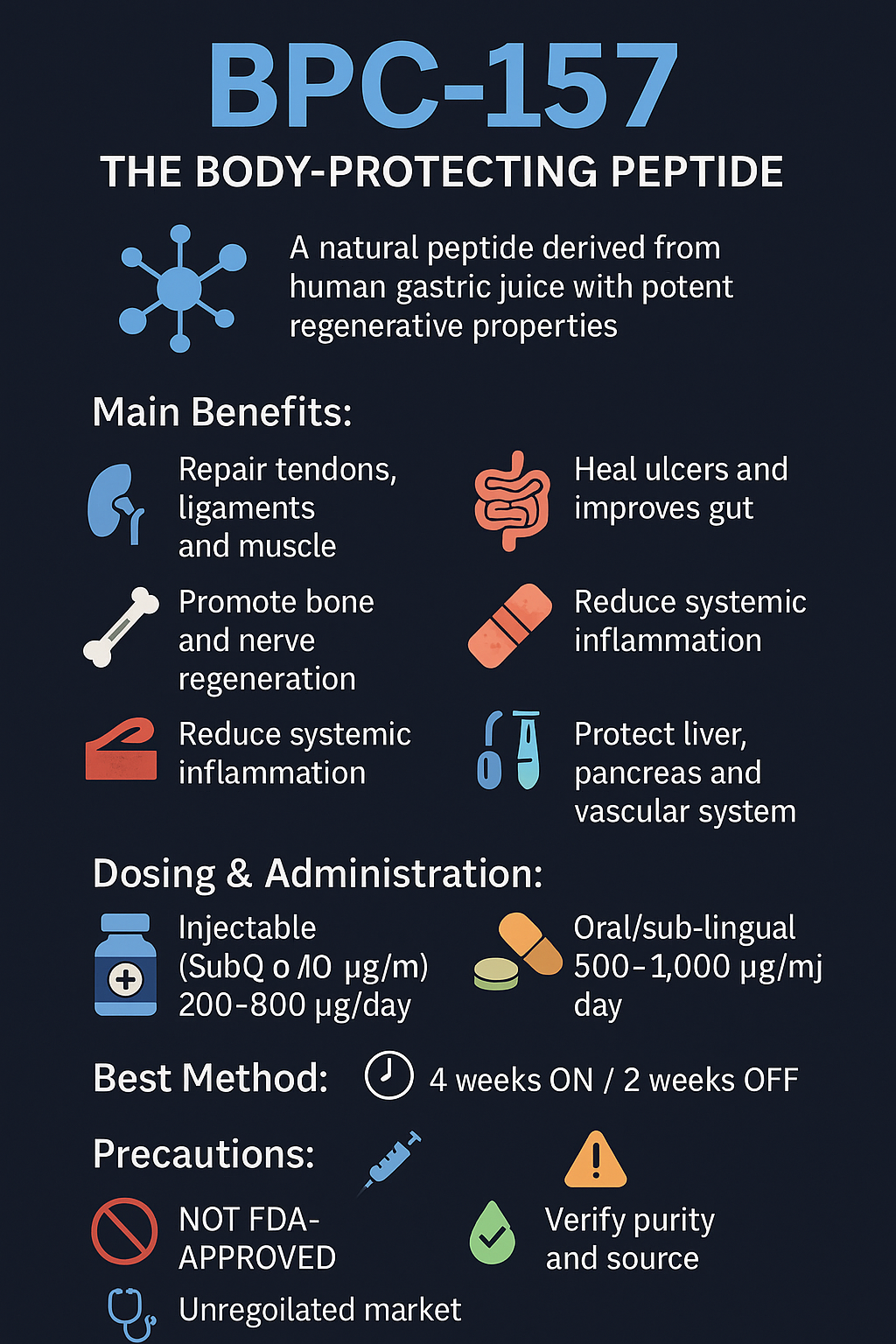
However, when taken in concentrated form (as an injectable or capsule), it appears to exert widespread healing and regenerative effects — not just in the gut, but also in tendons, ligaments, muscles, nerves, and even organs.
How BPC-157 Works
BPC-157 acts as a signal peptide, essentially telling your body to repair and rebuild.
Some of its best-understood mechanisms include:
Angiogenesis: Promotes new blood vessel growth by activating the nitric oxide (NO) system and VEGF (vascular endothelial growth factor) pathways. More blood flow = better healing.
Collagen synthesis: Enhances fibroblast activity, helping build connective tissue for tendons, skin, and ligaments.
Cytoprotection: Protects cells from inflammation and oxidative stress, especially in the gastrointestinal tract.
Anti-ulcer and gut repair: Helps heal stomach and intestinal lining, even reversing NSAID-induced damage.
Neuroprotective effects: Improves nerve regeneration in preclinical models.
Anti-inflammatory and organ-protective actions: Appears to modulate cytokines, reducing inflammation system-wide.
In simple terms, BPC-157 tells damaged tissues to start healing — faster and cleaner.
Potential Benefits of BPC-157 (Based on Current Research)
Though most studies are preclinical (animal or cell models), the data are consistent and impressive.
Here’s what BPC-157 has been shown to do in studies so far:
Tendon, Ligament, and Muscle Repair
Promotes tendon outgrowth, collagen formation, and cell migration in injured tendons.
Accelerates healing in torn ligaments and muscle injuries.
Counteracts steroid-impaired muscle recovery (useful for those recovering from cortisone injections).
Bone and Joint Health
Gut and Digestive Health
Repairs stomach and intestinal ulcers (anti-ulcer effects rival some prescription drugs).
Restores the intestinal barrier (“leaky gut”) and promotes healing of inflammatory bowel disease (IBD) in models.
Protects against NSAID-induced gut injury — earning it the nickname “the NSAID antidote.”
Nerve, Brain, and Organ Recovery
Encourages regeneration of nerve fibers and spinal tissue after injury.
Protects the liver and pancreas from toxins and stress.
May reduce brain inflammation and oxidative stress.
Vascular and Heart Health
Mouth, Teeth, and Skin
All this, so far, has been achieved with minimal reported side effects in research settings.
How BPC-157 Is Used: Injections vs Oral
1. Subcutaneous or Intramuscular Injection
This is the most common and effective method.
Dosing range (based on animal-to-human extrapolation and clinical anecdote):
→ 200–800 µg per day, often split into two doses (e.g., 250–350 µg twice daily).
→ Typical cycle: 4 weeks on, 2 weeks off (some extend to 8 weeks if well tolerated).
2. Oral or Sublingual Use
BPC-157 is unusually stable in stomach acid (hence “stable gastric peptide”).
This means oral use may still have systemic benefits — particularly for gut repair.
Oral capsules or sprays: Held under the tongue or swallowed.
Pros: Easy, non-invasive, excellent for digestive tract issues.
Cons: Lower bioavailability systemically compared to injections (less absorption into bloodstream).
Typical dose: 500–1,000 µg per day (varies by product quality).
Summary:
Injections → best for musculoskeletal or localized injuries.
Oral → best for gut or systemic inflammation.
Some practitioners combine both for synergistic effect.
Safety and Side Effects
BPC-157 has been studied since the early 1990s, with surprisingly few adverse effects reported in both human and animal studies — even at high doses.
Still, caution is needed:
Long-term safety in humans isn’t established.
The peptide market is unregulated, meaning purity and dosing accuracy vary widely.
Contaminated or mislabeled products pose a real risk.
Some worry that its angiogenic properties (new blood vessel growth) could potentially accelerate unwanted tissue growth (theoretical cancer risk, though never observed in research).
For these reasons, the FDA has not approved BPC-157 for human use, and it was added to the FDA’s “Do Not Compound” list in 2023.
Why BPC-157 Isn’t FDA Approved
Despite decades of promising data, the answer is simple: money, patents, and red tape.
Patent issues: BPC-157 is naturally derived from a protein your body already makes — meaning it can’t be patented easily. No patent = no profit incentive for drug companies.
High cost of approval: Full FDA approval requires massive investment (hundreds of millions, multiple clinical phases).
Grey-market use: Since it’s already widely available online and via compounding pharmacies, big pharma has little reason to spend billions on it.
There’s no big pharma conspiracy here — just economics.
The Bottom Line
What We Know:
✅ BPC-157 is a naturally derived peptide that shows powerful regenerative, anti-inflammatory, and cytoprotective properties in animal and early human studies.
✅ It appears beneficial for tendons, ligaments, muscles, bones, gut, and nerves.
✅ It has an outstanding safety profile so far.
What We Don’t Know:
❌ Long-term safety in humans.
❌ Standardized dosages and delivery methods.
❌ FDA-approved manufacturing or quality control.
Until human clinical trials catch up, BPC-157 remains a research peptide — not a regulated medical treatment.
My Takeaway
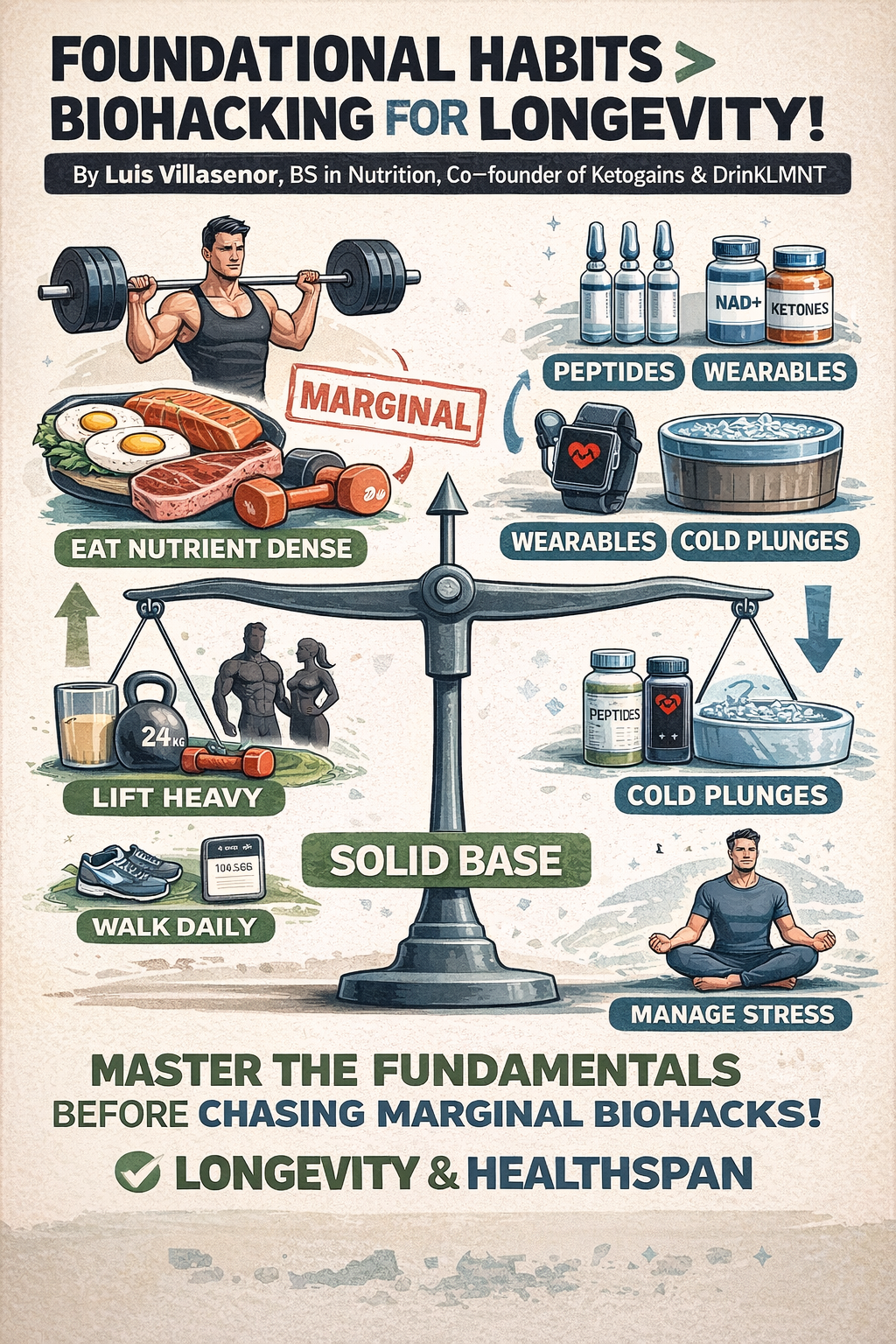
Healing and recovery start with nutrition, resistance training, sleep, and micronutrient sufficiency — not injections or shortcuts.
BPC-157 may be a useful adjunct for those working with knowledgeable medical professionals, but it’s no replacement for a nutrient-dense, protein-rich diet and a well-structured training program.
If you’re optimizing recovery:
Eat 1.2–1.6 g of protein per lean lb of bodyweight.
Prioritize red meat, eggs, seafood, and minerals like magnesium and zinc.
Train intelligently. Sleep deeply.
These will outperform any peptide stack when done consistently.
References
Sikiric, P., et al. (2018). The stable gastric pentadecapeptide BPC 157: A review of its mechanisms and healing potential. Current Pharmaceutical Design, 24(19), 2017–2030.
Chang, C. H., et al. (2021). BPC-157 and tissue regeneration: molecular mechanisms and clinical potential. Biomedicines, 9(9), 1189.
PeptideWebMD. (2025). Is BPC-157 safe and legal? A review of FDA regulations. Retrieved from https://peptidewebmd.com
New Regeneration Orthopedics. (2025). The hidden risks of BPC-157: What patients should know about contamination and safety.
Cushman, D., et al. (2025). BPC-157 in musculoskeletal healing: a narrative review. Current Reviews in Musculoskeletal Medicine, 18(2), 334-350.