By Luis Villasenor, BS in Nutrition, Co-founder of Ketogains & DrinkLMNT
Testosterone gets blamed for almost everything in men: aggression, confidence, dominance, competitiveness, libido, muscle gain, fat loss, motivation, and even success.
The problem is that most of these claims are exaggerated.
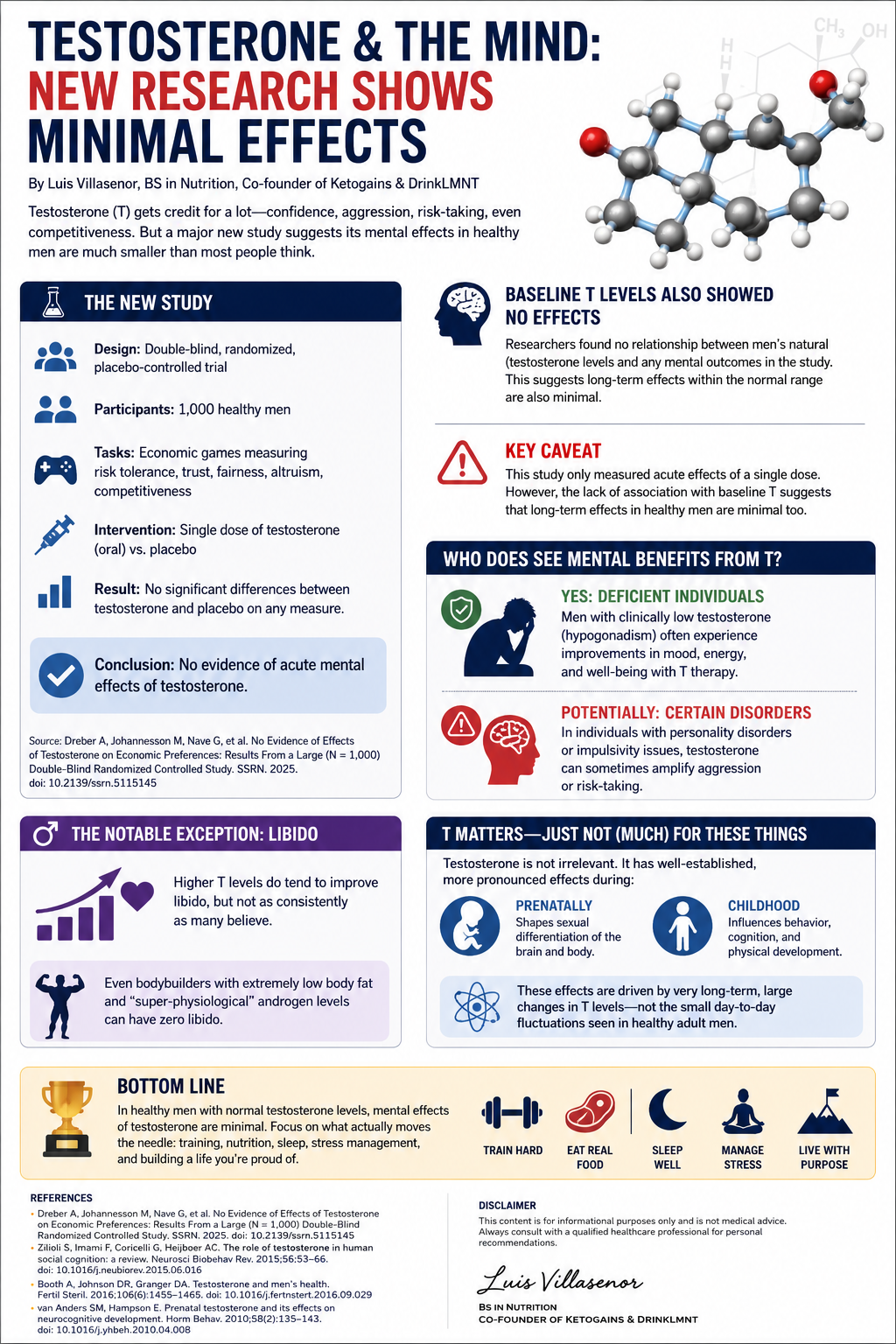
A new large, preregistered, double-blind randomized controlled trial looked at 1,000 healthy men and found that a single dose of testosterone did not meaningfully change risk-taking, fairness, altruism, trust, competitiveness, or other economic decision-making behaviors compared with placebo. (pnas.org)
That matters because many previous testosterone-behavior studies were small, inconsistent, or based on correlations. This study was much larger than typical prior trials and specifically tested whether acute testosterone administration changes measurable behavioral preferences. It did not.
The Main Takeaway
For healthy men with normal testosterone levels, testosterone is probably far less responsible for personality and behavior than most people think.
That does not mean testosterone is irrelevant.
It means context matters.
Low testosterone is a clinical issue. Normal testosterone variation is not the same thing as hypogonadism. And “higher” does not automatically mean better.
What the Study Found
The researchers gave healthy men either testosterone or placebo, then had them complete economic games designed to measure:
Risk tolerance
Trust
Fairness
Altruism
Competitiveness
Social decision-making
The testosterone group did not significantly differ from placebo on any measured outcome. (pnas.org)
They also found no meaningful relationship between baseline testosterone levels and the behavioral outcomes, which suggests that normal-range testosterone differences may not explain much about these traits in healthy adult men.
The Big Caveat
This study measured acute effects.
That means it tested what happens after a short-term testosterone increase, not what happens after years of exposure, puberty, prenatal androgen exposure, chronic hypogonadism, anabolic steroid abuse, or long-term testosterone therapy.
That distinction matters.
Testosterone has major biological effects during fetal development, puberty, and in clinically deficient men. But that is not the same as saying a healthy man with normal testosterone becomes more aggressive, more dominant, or more successful because his testosterone is slightly higher than another healthy man’s.
Where Testosterone Does Matter
Testosterone is important for:
Sexual function
Libido
Red blood cell production
Bone density
Muscle protein synthesis
Recovery capacity
Mood and energy in hypogonadal men
General male endocrine health
Men with true hypogonadism can experience improvements in sexual function, mood, energy, and quality of life with appropriately prescribed testosterone therapy. (OUP Academic)
But in healthy men, more testosterone is not a magic personality upgrade.
The Libido Exception
Libido is probably the clearest behavioral domain where testosterone matters.
Even then, it is not as simple as “more T = more libido.”
Very lean athletes, bodybuilders, and men under high physiological stress can have poor libido despite high or even supraphysiological androgen levels. Libido is affected by testosterone, but also by:
Energy availability
Sleep
Stress
Thyroid function
Dopamine signaling
Relationship context
Body fat levels
Training load
Medication use
Overall health
This is why chasing testosterone while ignoring recovery, nutrition, sleep, and stress is usually a bad strategy.
The Fitness Angle
In fitness, testosterone is often treated like the master variable.
But for natural trainees, once testosterone is within a normal physiological range, the basics usually matter more:
Progressive resistance training
Adequate protein
Sufficient calories for the goal
Good sleep
Electrolytes and hydration
Stress management
Consistency over time
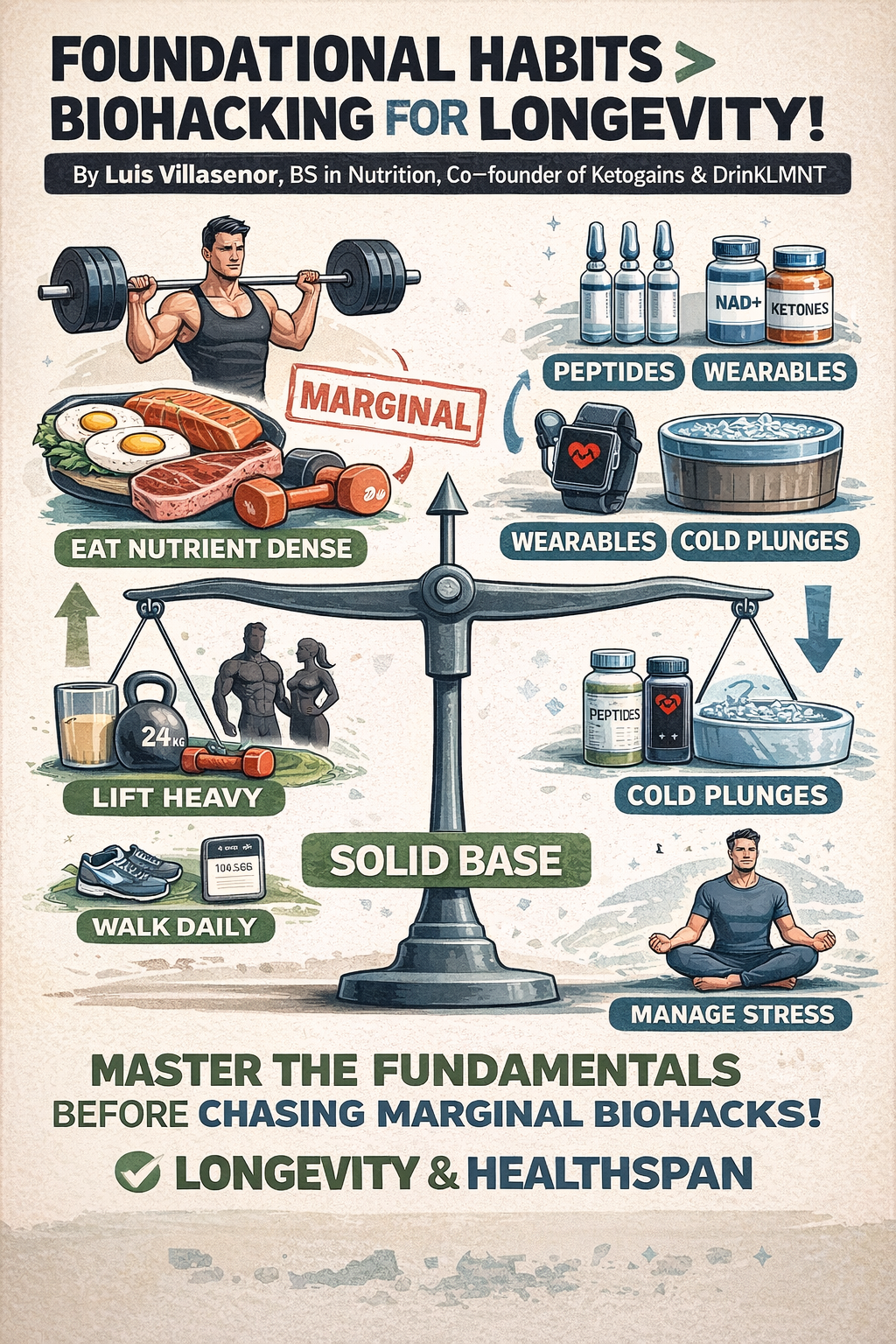
For body recomposition, I would rather see a man eat enough high-quality animal protein, train hard, sleep properly, and stop under-recovering than obsess over marginal testosterone differences that may not change much.
Practical Bottom Line
Testosterone matters most when it is clinically low.
But for healthy men in the normal range, testosterone is not the simple explanation for personality, aggression, confidence, competitiveness, or success.
Most men do not need to “optimize testosterone” as much as they need to stop sabotaging the things that support endocrine health in the first place:
Train hard.
Eat real food.
Prioritize protein.
Sleep enough.
Manage stress.
Stop chasing shortcuts.
Your hormones matter, but they do not replace discipline, environment, habits, and execution.
References
Dreber, A., Johannesson, M., Nave, G., Apicella, C. L., Geniole, S. N., Imai, T., Knight, E., Manfredi, D., Mehta, P. H., Proietti, V., Stanton, S. J., & others. (2025). Investigating the effects of single-dose intranasal testosterone on economic preferences in a large randomized trial of men. PNAS. (pnas.org)
Snyder, P. J., et al. (2024). Testosterone replacement therapy and sexual function in men with hypogonadism. The Journal of Clinical Endocrinology & Metabolism. (OUP Academic)
National Institute for Health and Care Research. (2024). The effects and safety of testosterone replacement therapy for men with hypogonadism. (NCBI)
Infographic already created here: Download the infographic