By Luis Villaseñor, BS in Nutrition | Co-Founder of Ketogains & DrinkLMNT
Let’s be brutally honest — tracking every bite in Cronometer or MyFitnessPal, scanning barcodes, and weighing every ounce of chicken isn’t discipline; it’s neurosis disguised as productivity.
Sure, it might teach you portion awareness for a few weeks, but if you’re still living by the food scale six months later, you’re not mastering nutrition — it’s mastering you.
The goal isn’t to micromanage your meals forever. The goal is freedom.
Freedom to eat, live, and stay lean without having to log your breakfast like it’s a scientific experiment. Freedom to stay shredded year-round because your habits — not your tracking app — keep you in shape.
So, how do you get lean without tracking a single calorie?
It’s deceptively simple. You eat the same thing every day.
That’s the secret. That’s the framework.
Every time I get photo-shoot shredded or need to dial it in, I strip everything back to simplicity.

My Exact Framework
I average 16 hours of fasting (basically a Lean-gains approach).
In the morning, I’ll have coffee with a packet of Chocolate LMNT, half a scoop of MCT (I love Ketobrainz), and cocoa collagen powder with nootropic mushrooms — that’s it.
This keeps hunger in check, boosts focus, and keeps insulin low until my first meal.
Meal 1 (Brunch):
3 whole eggs (sunny side up, using only coconut cooking spray).
~400g of ground beef or birria (pulled beef with spices)
~600g of steamed vegetables (broccoli, asparagus, heart of palm,or other low-calorie, high-fiber vegetables)
On training days, I’ll have the Ketogains pre-workout coffee (25g whey protein, 10g MCT oil, 1 LMNT, creatine mixed with lukewarm coffee) before heading out to train.
Meal 2 (Dinner):
+400g of ground beef or steak
~600g of mixed vegetables (green beans, cauliflower, mushrooms, zucchini)
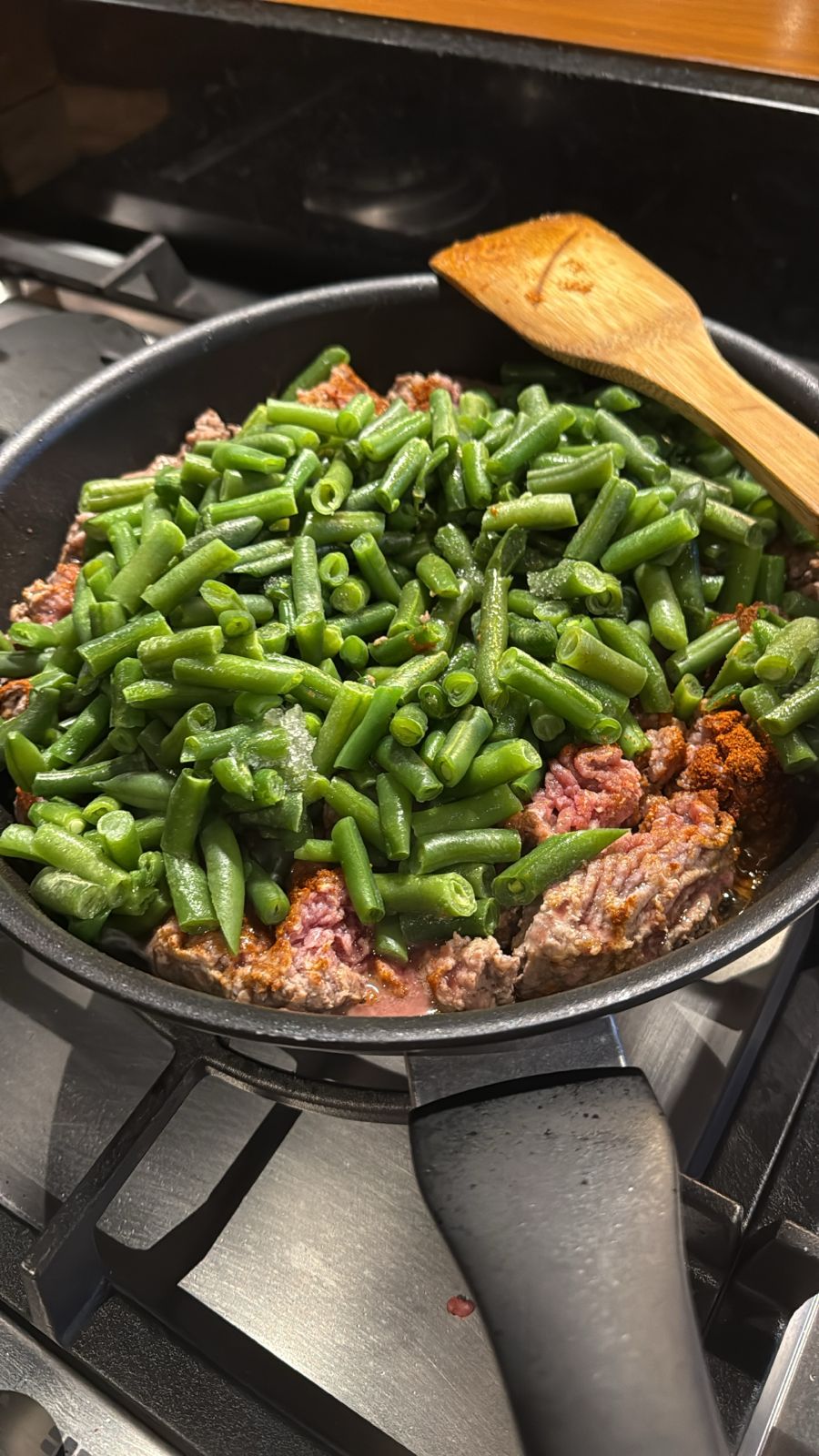
I don’t add butter, olive oil, or other calorie bombs - just a light coconut oil cooking spray for the pan, and that’s it.
Most days, I’ll eat exactly the same as above, except when I have a date night with my wife or a business / friends dinner and I’ll be more flexible, but always focusing on protein.
If I’m traveling, I replicate the same structure — eggs and protein-heavy meals first thing, ideally with something like smoked salmon or whatever lean option is available. Same principle, different plate.
If you noticed, I’m eating about a Kg (2.2 Lbs) worth of food per meal. This keeps me full, satiated, and I’m filling most of my nutritional needs via more than adequate protein and copious amounts of vegetables for micronutrients.
The Truth About “Perfect Diets”
We already know what the “perfect diet” is — it’s not a mystery.
A sustained calorie deficit.
Sufficient protein to preserve muscle mass.
That’s it. Everything else is window dressing.
Most people sabotage themselves not because they lack willpower, but because they make nutrition too complicated.
They’ll say things like:
“I need this much salmon… this many carbs… some greens for fiber…”
Then they go out to eat, order a “clean entrée,” and tack on a “healthy” salad drenched in dressing and oil — congratulations, you just added 600 calories of pure sabotage.
Forget the salad. Forget the “superfoods.” If your goal is fat loss, stop trying to tick every nutrition box. Focus on the only metric that matters: staying in a sustainable deficit with high protein intake.
When I eat out, I don’t waste time with sides or fancy extras.
I order the steak, drink water, and move on. Simple, predictable, effective.
Why Eating the Same Thing Works So Well
When you eat the same meals every day, you eliminate 90% of the mental battle.
There’s no temptation, no “just one bite,” no guessing. You’ve trained your hunger around your meals — your body knows when it’s full.
After a few days, it’s automatic.
Your brain recognizes 400g of beef and veggies as “a full meal.”
You finish eating, you’re satisfied, and you move on. No cravings, no overthinking.
This is what I call nutritional automation — it’s the same principle high performers use in every other area of life.
Think of it like a uniform: Steve Jobs wore the same outfit every day to eliminate decision fatigue.
You can do the same with food.
It’s not boring — it’s efficient.
If your goal is control and results, routine beats novelty every time.
How to Know You’re in a Deficit (Without Tracking)
You don’t need an app. You need awareness.
Weigh yourself in the morning — ideally after using the bathroom, before food.
If your average weight over the week is trending down, you’re in a deficit.
If it’s flat or up, trim a bit — eat a little less, skip the avocado, drop a few bites of beef.
Within a week or two, you’ll develop a feel for it.
You’ll know what “maintenance” feels like and what a deficit feels like.
Your hunger cues and body feedback become the tracking system.
And that’s the beauty of this approach — it teaches you to trust your body again.
Gun to your head, you already know when you’ve eaten too much.
You don’t need an algorithm to tell you that.
The Freedom of Simplicity
Getting lean doesn’t require complexity — it requires consistency.
Eat the same high-protein, whole-food meals daily.
Lift weights hard.
Sleep well.
Repeat.
You’ll stay lean not because you tracked perfectly, but because you built a system that doesn’t rely on willpower.
Once you’ve internalized your structure, you can go anywhere in the world and stay in shape. No scale, no app, no counting required — just rhythm, simplicity, and self-awareness.
Summary:
That’s it.
No confusion. No obsession. No burnout.
Just mastery over your body — and your life.
References
Hall, K. D., et al. (2019). Ultra-processed diets cause excess calorie intake and weight gain: An inpatient randomized controlled trial of ad libitum food intake. Cell Metabolism, 30(1), 67–77. https://doi.org/10.1016/j.cmet.2019.05.008
Leidy, H. J., et al. (2015). The role of protein in weight loss and maintenance. The American Journal of Clinical Nutrition, 101(6), 1320S–1329S. https://doi.org/10.3945/ajcn.114.084038
Rolls, B. J. (2017). The relationship between dietary energy density and energy intake. Physiology & Behavior, 176, 139–148. https://doi.org/10.1016/j.physbeh.2017.03.015
Simpson, S. J., & Raubenheimer, D. (2021). Obesity: The protein leverage hypothesis. Obesity Reviews, 22(1), e13199. https://doi.org/10.1111/obr.13199